Logan Keller · 7 September 2026
Artisanal Knitting Patterns Face New Legal Shields as Proposed Bills Target Commercial Copycats
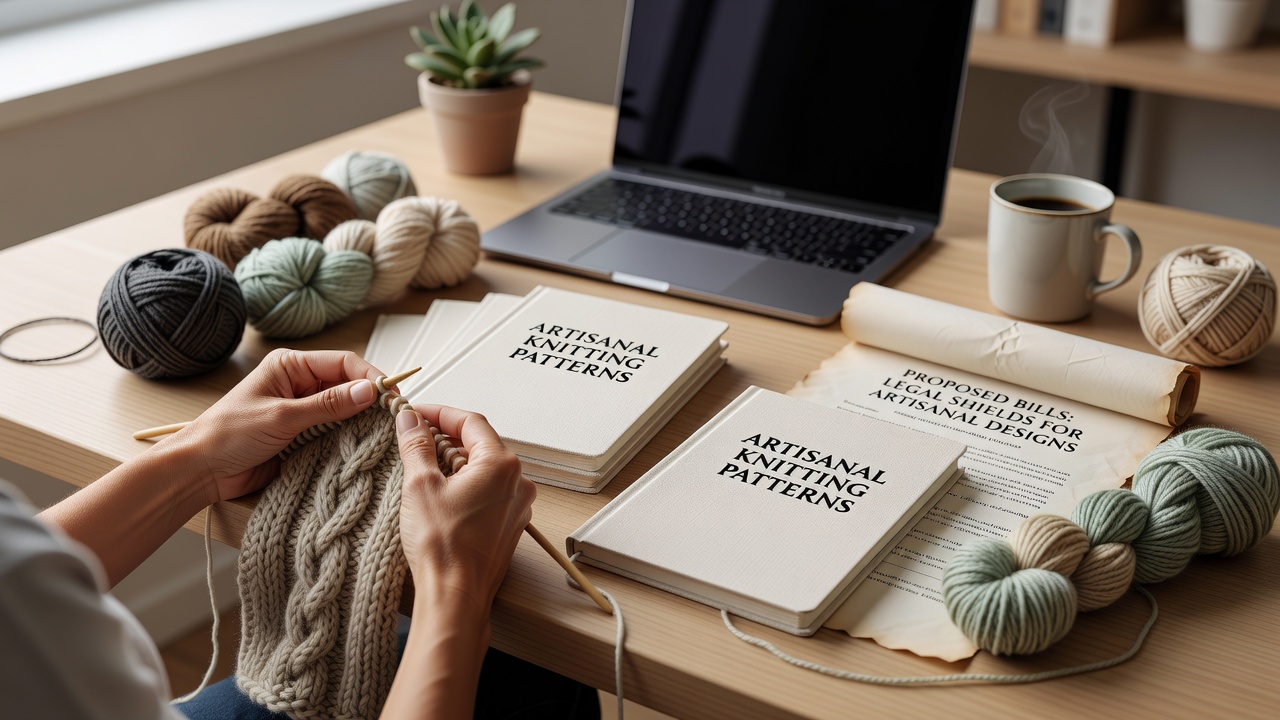
Proposed legislation across multiple jurisdictions aims to strengthen protections for independent knitting designers whose original patterns face unauthorized commercial reproduction, and lawmakers in September 2026 continue to advance measures that address gaps in existing copyright frameworks for craft instructions. These bills seek to clarify how pattern creators can safeguard their work when others sell derivative versions or mass-produce items based on those designs without permission.
Current Challenges in Pattern Protection
Independent designers release knitting patterns through digital platforms and small-scale publications, yet commercial entities sometimes replicate those instructions with minor alterations before offering them for sale at scale. Observers note that enforcement remains difficult because traditional copyright law treats patterns as compilations of ideas rather than fixed expressions in every instance, and disputes often hinge on whether copied elements qualify as substantial reproduction. Data from craft industry reports indicate rising complaints filed with intellectual property offices, while designers report lost revenue when copycat versions appear on major marketplaces within weeks of an original release.
Take one designer based in Vermont who tracked sales data showing a sharp drop after a similar pattern surfaced under a different brand name, and court records from related cases reveal that judges have reached varying conclusions on whether stitch diagrams constitute protectable artwork. Researchers at design schools have documented how such practices affect smaller creators who lack resources for prolonged litigation, and industry groups have compiled case studies demonstrating patterns of repeated copying across online marketplaces.
Details of Proposed Legislation
Bills introduced in the United States House of Representatives during the 2026 session include provisions that would extend specific remedies for pattern misappropriation, allowing creators to seek statutory damages when commercial copies appear without attribution or licensing. Similar proposals in the Canadian Parliament focus on registration requirements that would create a public database of protected knitting charts, enabling faster identification of infringements. European Parliament committees have reviewed amendments to the Copyright Directive that address digital craft files, and those discussions emphasize harmonized rules across member states to reduce forum shopping by copyists.
And here's where enforcement mechanisms come into play: the measures would require platforms hosting pattern sales to implement notice-and-takedown procedures tailored to craft content, while also mandating clearer labeling when derivative works draw from existing designs. Government agencies such as the U.S. Patent and Trademark Office have provided technical input on how to distinguish between generic stitch techniques and original pattern sequences, and analysts project that these changes could streamline dispute resolution for thousands of small-scale creators.
Impact on Artisanal Communities
Communities of independent knitters have organized webinars and workshops to review the draft language, and participants often highlight how clearer rules would support sustainable businesses built around unique cable motifs or lace constructions. Figures from trade associations show that pattern sales contribute significantly to household incomes for many part-time designers, yet unauthorized reproductions erode that foundation when sold at lower prices through automated channels. One cooperative in Scotland reported increased collaboration among members after learning about potential collective registration options under new proposals, and similar groups in Australia have begun pilot programs to catalog their libraries in anticipation of updated statutes.
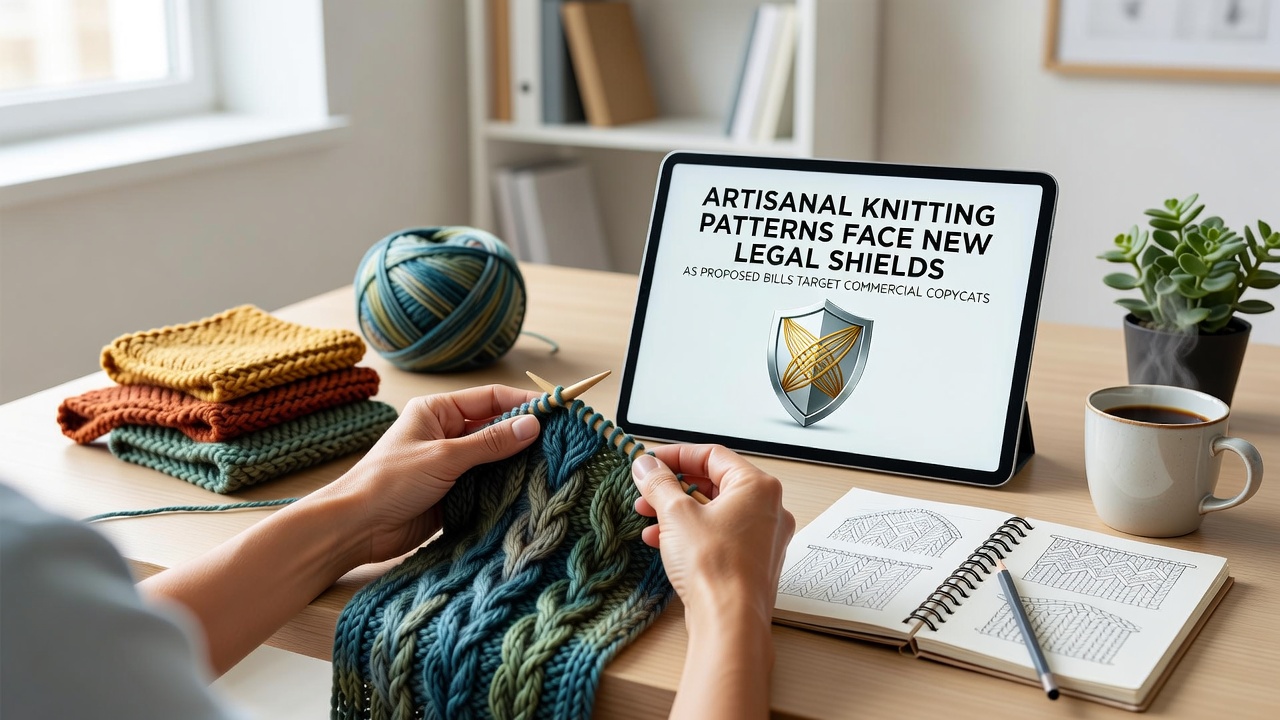
What's notable is the way these developments intersect with broader digital rights management trends, as pattern files increasingly include embedded metadata that could aid in proving originality during disputes. Academic studies from textile departments at universities in New Zealand have examined how such metadata performs in practice, and early findings suggest improved traceability without restricting the sharing of techniques themselves. Those who've studied this know that the distinction between protected expression and public-domain stitches remains central to ongoing debates.
International Perspectives and Enforcement Trends
Regulatory bodies outside North America and Europe have also examined the issue, and IP Australia released guidance documents in mid-2026 outlining how existing design rights might extend to knitting charts when they incorporate original graphical elements. Canadian officials have coordinated with counterparts in the United Kingdom to share best practices on cross-border enforcement, while workshops hosted by the World Intellectual Property Organization have featured case presentations from designers in South America and Asia. These sessions underscore that commercial copying often occurs across national lines, making uniform standards particularly valuable.
Yet implementation timelines vary, and some proposals include phase-in periods allowing existing pattern libraries to register retroactively. Industry organizations continue to submit comments that stress the need for accessible filing systems, and data collected through these consultations reveal consistent concerns about cost barriers for individual creators. Observers note that successful models from other creative fields, such as photography licensing databases, offer templates that could adapt to knitting patterns without excessive administrative overhead.
Conclusion
Proposed bills targeting commercial copycats represent a shift toward more explicit safeguards for artisanal knitting patterns, and developments through September 2026 indicate growing coordination among policymakers, designers, and intellectual property offices. The measures address documented gaps in current protections while preserving the collaborative spirit that defines craft communities, and their progress will depend on continued input from those directly involved in pattern creation and distribution.