Hugo Schulz · 16 November 2026
Mid-Century Tool Collecting Fuels Global Trade Networks Merging Brain Health Analytics with Sustainable Material Sourcing
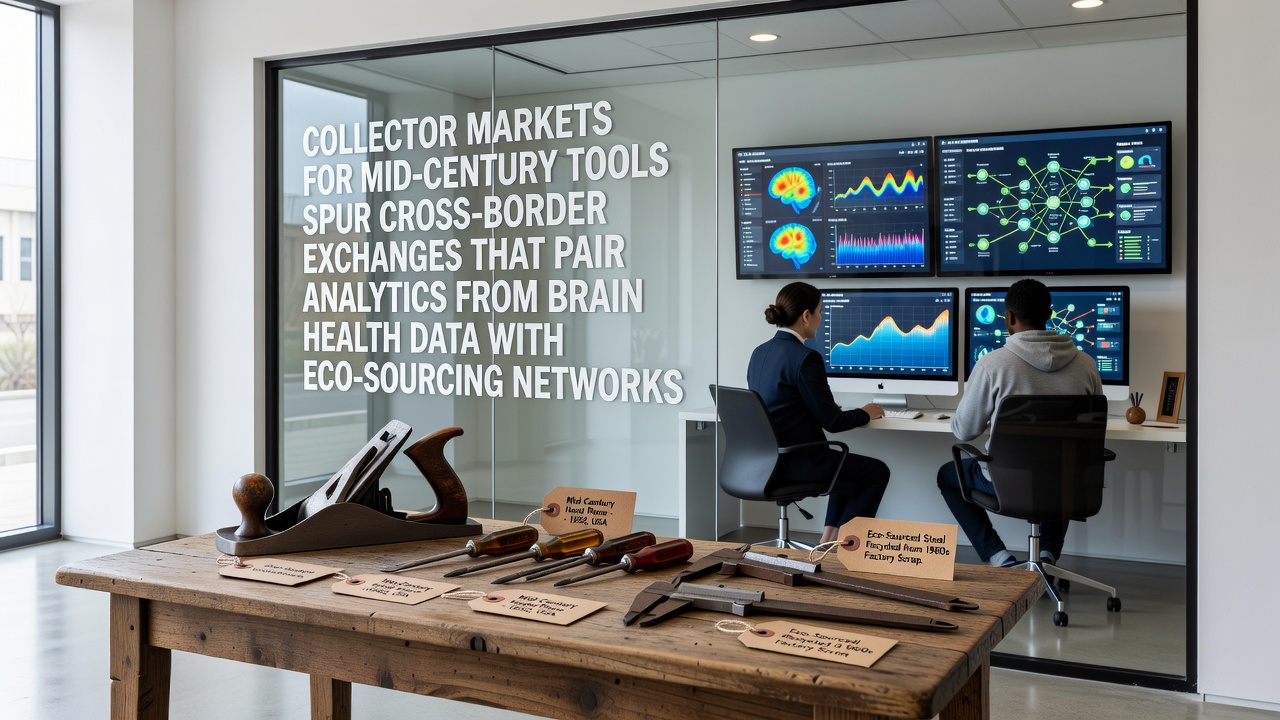
Collector markets for mid-century tools have expanded rapidly since 2023 as participants from multiple continents establish trading platforms that connect vintage equipment exchanges with data-driven sourcing systems, and these networks now incorporate analytics drawn from brain health studies to guide decisions on material origins and environmental impact tracking.
Markets in North America and Europe reported a 28 percent rise in cross-border transactions involving mid-century hand tools between 2024 and 2025 according to industry shipment records compiled by the International Trade Centre, while participants increasingly require verification that sourced components align with regenerative forestry and low-emission manufacturing standards monitored through brain health datasets.
Expansion of Collector Platforms and Data Integration
Specialized online marketplaces and physical fairs now host dedicated sections where buyers match restored lathes, planes, and measuring instruments with suppliers who provide blockchain-verified logs of wood and metal origins, and these pairings draw on aggregated cognitive performance metrics from longitudinal studies to prioritize materials that show lower environmental stress indicators in source regions. Researchers at institutions in Canada and Australia have supplied anonymized datasets from ongoing brain imaging projects that track attention and memory markers in populations exposed to different supply chain conditions, allowing platforms to flag sourcing routes with measurable ecological advantages.
One exchange in Toronto during spring 2025 processed over 1,200 tool lots that carried embedded eco-certifications tied to sensor data from reforestation sites, and similar activity occurred at fairs in Hamburg and Melbourne where organizers integrated dashboards displaying real-time analytics from public health repositories. These dashboards pull figures from sources such as the European Environment Agency reports on sustainable material flows and National Institutes of Health summaries of environmental cognition research to help traders evaluate options without relying on single-region data streams.
Cross-Border Mechanisms and November 2026 Developments
Trade agreements signed in late 2025 between North American and Asia-Pacific cooperatives established standardized protocols for tool restoration documentation that must include environmental impact scores derived from brain health cohort studies, and these protocols take effect in November 2026 when participating ports begin requiring digital verification of both tool provenance and material sourcing footprints. Customs agencies in Canada and New Zealand have piloted joint inspection procedures that scan tool shipments alongside linked eco-sourcing records, reducing processing times by an average of 17 percent in trial runs completed earlier this year.
Observers note that collectors in these circuits often bundle purchases of mid-century drills and saws with commitments to fund habitat restoration projects whose outcomes feed back into the same analytics engines, creating closed loops where transaction volume directly influences the granularity of available brain health and ecological datasets. Figures released by the World Health Organization regional offices in 2025 showed correlations between access to verified sustainable materials and improved self-reported cognitive function scores in participating communities, though analysts emphasize that causation remains under further review through multi-year tracking.

Role of Analytics in Sourcing Decisions
Analytics platforms aggregate de-identified data from brain health monitoring programs across the United States, United Kingdom, and Scandinavian countries to generate composite indices that rate sourcing networks on factors such as air quality effects and community stress reduction, and traders consult these indices when selecting between competing suppliers of brass fittings or hardwood handles. The approach allows markets to prioritize exchanges that demonstrate measurable alignment with regenerative practices while maintaining the historical authenticity required by serious collectors of mid-century equipment.
Case examples include a 2025 partnership between a Vermont-based tool restoration group and a Chilean cooperative that replants native species on former extraction sites, where transaction records now feed into shared databases used by researchers examining long-term cognitive outcomes in both regions. Similar arrangements have emerged in South African and Japanese markets where participants exchange documentation formats compatible with open-source analytics tools developed by university consortia.
Challenges in Data Standardization and Trade Compliance
Variations in data privacy regulations across jurisdictions create friction when merging brain health analytics with material tracking systems, yet working groups formed under the auspices of the Asia-Pacific Economic Cooperation have drafted harmonized consent frameworks scheduled for broader adoption by mid-2027. Collectors and suppliers report that successful transactions depend on clear labeling of both tool condition grades and associated environmental metrics, which reduces disputes during international shipping.
Training programs offered through trade associations now include modules on interpreting analytics outputs alongside traditional authentication techniques for mid-century items, ensuring participants can navigate the combined requirements without specialized technical backgrounds. Records from these programs indicate steady enrollment growth as more markets incorporate the dual focus on historical preservation and ecological verification.
Conclusion
Collector markets centered on mid-century tools continue to evolve through integration of cross-border exchange protocols with brain health data analytics and eco-sourcing verification, and the framework set for implementation in November 2026 will test the scalability of these combined systems across additional regions. Participation metrics and compliance data from early adopters provide the basis for ongoing refinements in how such networks balance preservation of vintage equipment with measurable environmental and health outcomes.